The war in Ukraine has taken another leap into modern warfare with the widespread deployment of armed ground robots.
While drones and uncrewed boats have already transformed the air and sea battlefields, Ukrainian forces are now relying heavily on uncrewed ground vehicles, or UGVs, to perform missions that are too dangerous for soldiers.
These machines are changing how battles are fought, from delivering supplies to actively engaging enemy forces.
Ukrainian UGVs have already made their mark in combat. Some have successfully defended positions, disrupted Russian attacks, and even captured enemy soldiers without direct human involvement.
In some instances, Ukrainian and Russian robots have faced each other on the battlefield, highlighting a new reality where machines, not humans, can be at the front lines.
"Robot wars are already happening," says Oleksandr Afanasiev of the Ukrainian army’s K2 brigade, who leads what he calls the world’s first UGV battalion.
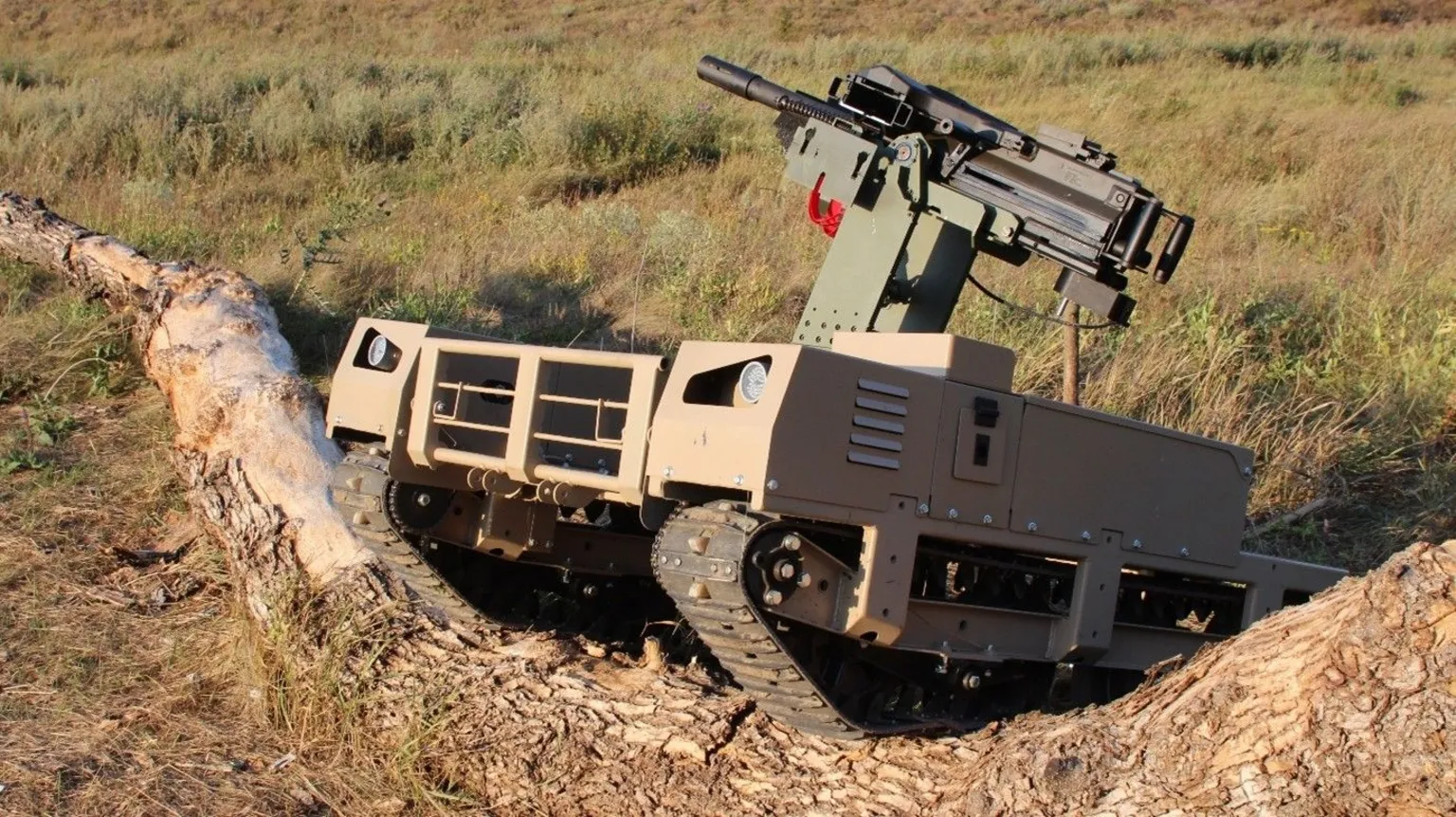
Afanasiev explains that some robots are fitted with Kalashnikov machine guns, taking on roles that would be deadly for infantry soldiers. "They open fire on a battlefield where an infantryman would be afraid to turn up. But a UGV is happy to risk its existence," he adds.
The battalion also employs explosive-laden kamikaze robots to destroy enemy positions and hideouts. Unlike aerial drones, these ground vehicles move silently, giving no warning before striking.
Afghan, the deputy commander of the 33rd Detached Mechanised Brigade’s tank unit, says one UGV ambushed a Russian personnel carrier, while another robot held a Ukrainian position for weeks.
He notes that while these machines are highly capable, ethical limits and international humanitarian law restrict their autonomy.
"Modern UGVs are part-autonomous. They can move on their own, they can observe and detect the enemy. But still, the decision to open fire is made by a human, their operator," Afghan explains.
"Robots can misidentify the wrong person or attack a civilian. That's why the final decision must be made by an operator." Most armed UGVs are controlled remotely by operators from a safe distance, combining human oversight with machine efficiency.
These combat robots are versatile. They can carry machine guns, grenade launchers, plant mines, or deploy barbed wire. Despite these capabilities, most UGVs continue to carry out support tasks such as transporting supplies or evacuating injured soldiers.
Valerii Zaluzhnyi, Ukraine’s former commander-in-chief, predicts a rapid expansion of robotic operations. Speaking at Chatham House in London, he said future warfare will involve large, AI-powered swarms of drones and UGVs attacking simultaneously from land, air, and sea.
"In the near future we'll see dozens and even hundreds of smarter and cheaper drones attack from various directions and heights, from the air, ground and sea at the same time," he said.
The main driver behind the surge in robotic warfare is the growing danger to human troops. The “kill zone” has expanded to roughly 20-25 kilometres from front lines due to the use of aerial drones, making UGVs essential for protecting soldiers. "Ukraine can afford to lose robots, but it simply cannot afford to lose battle-ready soldiers," Afanasiev says.
Russia is also developing its own combat robots, including the Kuryer, capable of carrying heavy machine guns or flamethrowers, and the Lyagushka kamikaze vehicles used to destroy Ukrainian positions.
Yuriy Poritsky, CEO of Ukrainian UGV maker Devdroid, predicts that direct battles between Ukrainian and Russian robots are inevitable. "Sooner or later, we'll end up in a situation where our strike UGV will come up against their strike UGV on the battlefield. Robot wars may sound like science fiction, but there's nothing sci-fi about the battlefield. It's our reality," he says.
Poritsky’s company is working on technology that allows UGVs to return to base if operator communication is lost. In the future, these robots may operate autonomously to reach a location, perform tasks such as monitoring enemy movements, engage targets if necessary, and then return to base.
Another Ukrainian manufacturer, Tencore, produced over 2,000 UGVs for the army in 2025. Maksym Vasylchenko, the company’s director, expects demand to rise sharply in 2026, with at least 10-15 percent of these machines being armed for combat.
"Strike drones [UGVs] will become indispensable, there's no question about it," Vasylchenko says, adding that future robots may even fight in human-like forms. "It won't be science fiction anymore."